
Broken Garage Door Springs: Causes, Risks, and Solutions
Broken Garage Door Springs: Causes, Risks, and Affordable Repair Solutions
Broken garage door springs pose significant challenges to homeowners, often leading to inconvenience and safety risks. Understanding the causes and symptoms of spring failures can aid in early detection and prevent serious damages. Garage door springs are critical components, as they support the door’s weight and facilitate its movement. Neglecting to address a broken spring can lead to larger issues, such as the garage door falling or malfunctioning, which can endanger anyone nearby.
In this article, we will explore the various causes of broken garage door springs, the warning signs that indicate a failure, the associated risks, and affordable repair solutions. By the end of this guide, readers will be equipped with knowledge about garage door springs and how to handle spring-related issues effectively. Topics will include the signs of failing springs, risks of ignoring problems, and the available repair options, including professional services that ensure safety and reliability.
Broken Garage Door Springs: Overview
Broken garage door springs refer to the failure of tension or torsion springs that support the garage door’s weight and operation. These springs can wear out over time due to stress, wear and tear, or external impacts. Understanding the mechanics behind these failures is crucial, as they can prevent accidents and costly repairs. Timely repair of garage door springs can enhance the door’s functionality and ensure safety for all users.
Understanding Garage Door Spring Malfunctions & Mechanics
There are various explanations for a garage door malfunction, but this paper will focus on the most common of them all—a broken spring. Inspired by the fact that garage door technicians must match the right spring to the appropriate garage doors, this project produced a spring conversion calculator. This paper provides a preface and comprehensive explanation of the mechanisms of overhead garage doors. Initially, it introduces the garage door and its components, then provides a detailed explanation of a door’s lifting mechanisms, and lastly, elaborates on spring theory, focusing on the physics and calculations of spring properties. The physics behind garage door springs, 2017
Causes of Broken Springs:
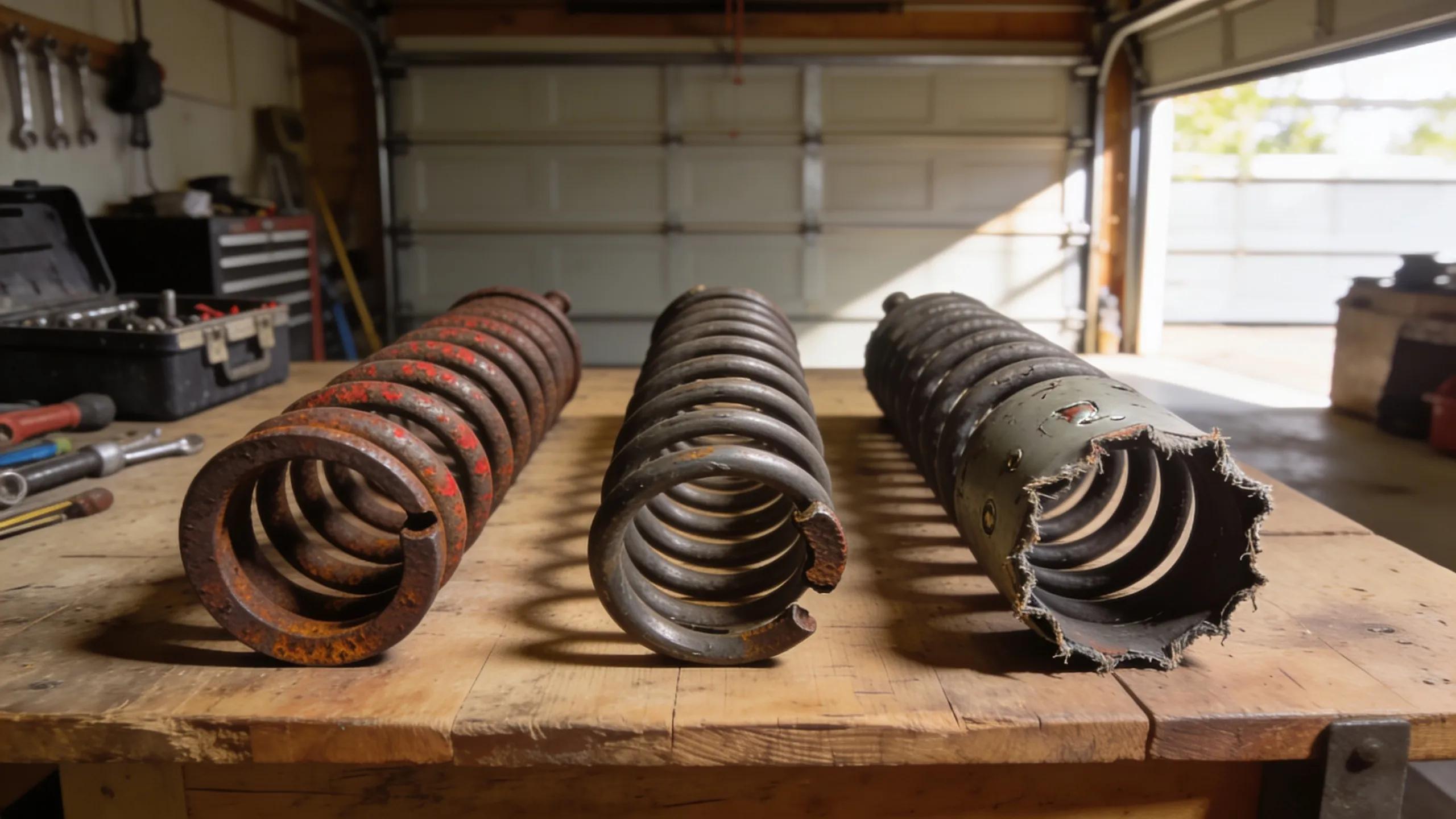
The primary causes of broken garage door springs can be attributed to several factors:
- Normal Wear and Tear: Over time, springs experience strain and fatigue, leading to eventual failure.
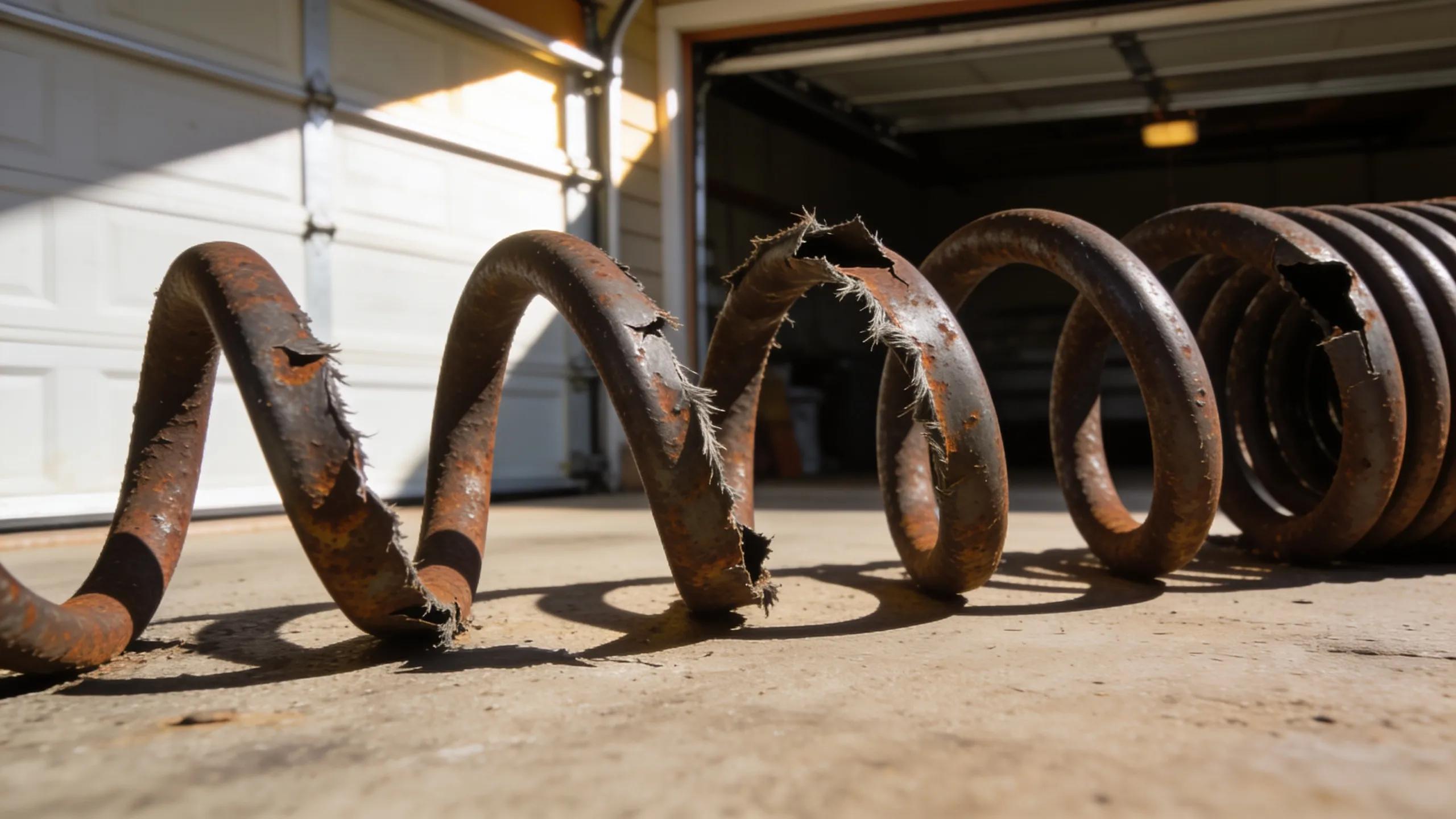
- Rust and Corrosion: Environmental conditions can deteriorate materials, weakening springs and causing them to break.
- Incorrect Sizing or Tension: If springs are improperly sized or tensioned during installation, it can result in premature failure.
These factors underline the importance of regular maintenance to extend the lifespan of garage door springs and prevent potential issues.
Warning Signs of Failing Springs:
Identifying the warning signs of broken garage door springs is essential to address problems before they escalate. Key indicators include:
- Heaviness of the Door: If the door feels significantly heavier when opening, it may indicate spring failure.
- Limited Movement: Difficulty in opening or closing the door smoothly can signal that the springs are weakening.
- Loud Noises: Unusual sounds, such as snapping or squeaking, often precede spring failure.
Recognizing these symptoms early can help homeowners take preventive measures, reducing repair costs and increasing safety.
Associated Risks:
Ignoring broken garage door springs carries significant risks that can impact safety and finances. Some associated risks include:
- Safety Hazards: Malfunctioning springs can lead to unexpected door falls, posing injury risks to individuals nearby.
- Additional Damages: A broken spring can strain the garage door opener and other components, resulting in further system failures.
- Financial Implications: Delayed repairs lead to higher costs due to extended damage to the door and operating mechanism.
It’s crucial to act promptly upon noticing any signs of issues with garage door springs to mitigate these risks.
Affordable Repair Solutions:
When faced with broken garage door springs, there are several affordable repair solutions to consider:
- Professional Replacement: Hiring trained technicians ensures thorough and safe spring replacement, minimizing future risks. Precision Garage Door Service specializes in garage door services, including spring repair and replacement, offering expert evaluations to determine the best course of action.
- Regular Maintenance: Conducting periodic inspections and maintenance can significantly prolong the life of garage door springs, avoiding unexpected costs.
- High-Quality Parts: Investing in quality springs from reputable providers ensures durability and reliability, helping prevent future failures.
Considering these options can aid homeowners in making informed decisions regarding their garage door systems.
Repair Process:
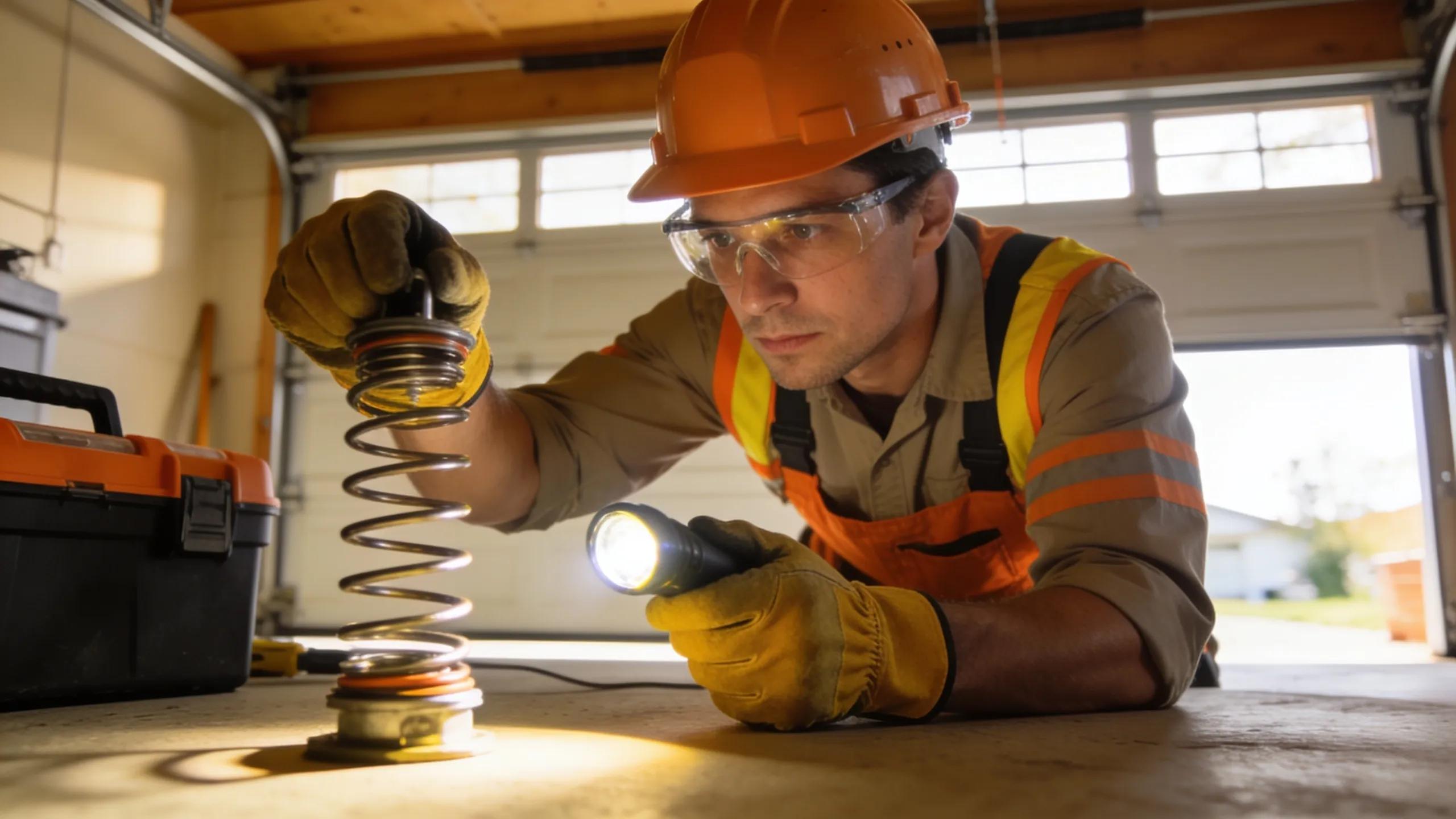
Understanding the repair process for broken garage door springs can provide insight into what to expect. Here are the typical steps involved:
- Inspection Procedures: A thorough evaluation of the garage door system identifies the problem’s severity and type of spring involved.
- Spring Selection Criteria: Professionals assist in selecting the appropriate replacement springs based on the door’s weight and design.
- Safety Measures: Ensuring proper safety protocols during the repair process is crucial, as garage door springs are under high tension.
With professional help, homeowners can ensure that the repair is conducted safely and effectively.
Common Signs Your Garage Door Spring Is Broken?
Recognizing the common signs that indicate a broken garage door spring can prevent further complications. Key indicators include:
- Heaviness of the Door: Difficulty in lifting the door manually can signal spring failure.
- Limited Opening: If the door does not rise correctly, this may signify a spring issue.
- Visible Damage: Cracks or deformities on visible spring portions indicate that they’re failing.
Being aware of these symptoms allows homeowners to respond quickly, reducing potential risks and damages.
How to Identify Signs of Broken Torsion Springs
Identifying broken torsion springs requires close inspection. Homeowners should conduct a visual check by observing the spring’s condition for any signs of damage, such as bends or cracks. Additionally, testing the door’s weight by lifting it manually can provide insight into the spring’s functionality. If the door feels exceptionally heavy, it is often a sign of torsion spring failure, necessitating prompt attention.
Other Warning Signs of Broken Garage Door Springs
In addition to the more common signs of a broken spring, other symptoms may include:
- Uneven Door Movement: If one side of the door moves more quickly than the other, it could indicate spring issues.
- Opener Strain: If the garage door opener struggles to lift the door or makes excessive noise, it may signify a spring problem.
- Ignoring Symptoms Consequences: Continuing to use a malfunctioning garage door can lead to more extensive repairs or injuries.
Being vigilant about these signs can help maintain a safe home.
What Causes Garage Door Springs to Break and How Can You Prevent It?
Understanding the causes behind garage door spring failures is vital. Common causes include inadequate maintenance leading to rust and improper usage that creates excessive stress on the springs. To prevent such failures, homeowners should follow these preventive measures:
- Regular Maintenance Practices: Conducting yearly inspections and periodic lubrication can significantly prolong the lifespan of springs.
- Correct Installation: Ensuring springs are installed by professionals can prevent sizing or tension issues.
- Environmental Considerations: Taking precautions against corrosion, such as keeping springs clean and protected from moisture, can extend their life.
Employing these practices is essential for maintaining the functionality of garage door systems.
What Are the Main Causes of Garage Door Spring Failure?
The main causes of garage door spring failure typically revolve around:
- Normal Wear: Springs naturally experience deterioration due to regular use, which can lead to breakage.
- Rust Accumulation: Exposure to moisture can cause corrosion, weakening the spring material.
- Temperature Impact: Extreme temperature fluctuations can affect spring tension and performance.
Recognizing these causes helps in planning effective preventive measures.
Which Maintenance Tips Help Extend Garage Door Spring Life?
Extending the life of garage door springs requires diligent maintenance practices:
- Regular Lubrication: Applying a suitable lubricant can reduce friction and prevent rust.
- Professional Maintenance: Scheduling inspections with experts ensures that any issues are promptly addressed. Scheduling garage door repairs with experienced professionals is key to identifying and rectifying potential issues before they escalate.
- Immediate Attention to Wear: Addressing any signs of wear or damage immediately can prevent larger issues.
Adhering to these tips can prolong the longevity of garage door springs and minimize the need for costly repairs.
How Much Does Garage Door Spring Replacement Cost and What Affects Pricing?
Garage door spring replacement costs can vary significantly based on various factors. Typically, the average costs associated with replacements can include:
- Cost Factors: Type of spring (torsion vs. extension), quality of materials, and labor rates can all influence pricing.
- Type of Springs: Torsion springs are generally more expensive than extension springs due to their complexity and durability.
- Labor Costs: Hiring professionals may incur additional costs, but it ensures safety and quality of work.
Understanding these factors can help homeowners budget for necessary repairs.
What Is the Typical Cost to Fix Broken Garage Springs?
The typical cost for fixing broken garage springs usually falls within the range of $150 to $350, depending on factors like the type of spring and service fees. Homeowners should consider obtaining quotes from professionals to ensure competitive pricing and quality service.
What Factors Influence Garage Door Spring Repair Costs?
Numerous factors can influence the cost of garage door spring repairs:
- Type of Spring Used: Different springs, such as torsion or extension, come at varying costs.
- Location of Service: Costs may vary based on geographical location and availability of technicians.
- Additional Damage Costs: If there is related damage to the garage door or opener, this can increase overall repair costs.
Identifying these factors helps maintain a transparent understanding of potential expenses involved.
Should You Attempt DIY Garage Door Spring Replacement or Hire a Professional?
When it comes to garage door spring replacement, the choice between DIY and professional help often boils down to safety and expertise. While some individuals may be tempted to undertake repairs themselves to save money, hiring a qualified technician is generally advisable due to the inherent dangers associated with high-tension springs. Improper handling can lead to injuries or further damages. Hiring a professional garage door repair service ensures that the job is done right the first time.
What Are the Risks of DIY Garage Door Spring Replacement?
Attempting to replace garage door springs without professional assistance carries numerous risks, including:
- Physical Injury Risks: High-tension springs can snap and cause severe injuries if mishandled.
- Potential for Damage: Incorrect installation can lead to additional damage to the garage door or opener, incurring more costs.
- Voiding Warranties: Many systems come with warranties that may be voided if DIY repairs are performed incorrectly.
Weighing these risks against the benefits of professional help is essential for ensuring safety.
How Can Local Garage Door Spring Repair Services Help You?
Engaging local garage door spring repair services offers numerous advantages for homeowners:
- Expertise in Service: Trained professionals bring comprehensive knowledge and experience, ensuring repairs are performed correctly.
- Comprehensive Evaluations: Local services can provide thorough inspections to identify issues before they escalate.
- Safe Installations: By using experienced technicians, homeowners can rest assured that their garage doors will be restored safely and efficiently.
Utilizing local services can enhance the safety and reliability of garage door mechanisms, providing peace of mind.